Science of Rajyoga Meditation
The Science of Rajyoga Meditation explores how spiritual practices reshape and harmonize the brain’s functioning. Modern neuroscience reveals that visualization creates real neural pathways, positive self-talk strengthens the connection between the thinking and emotional centers, and the “God” circuits activate feelings of peace, love, and divinity. Raja Yoga integrates these inner processes into a conscious dialogue with the self and the Supreme. It transforms thought energy into spiritual power—leading to clarity, emotional balance, and self-mastery through the union of mind, brain, and soul.

Raj Yoga - What is Meditation?
This visual introduces Raj Yoga/Raja Yoga as a holistic way of life that integrates learning, connecting, and expressing higher values through awareness, service, and wisdom. It emphasizes the use of creative visualization, introspection, and emotional connection to attain self-mastery. The section on meditation explains it as a journey inward—an experience of self-introspection, conscious positivity, and communion with the Divine. By practicing awareness with love and non-judgment, one cultivates peace, clarity, and a state of soul-consciousness.
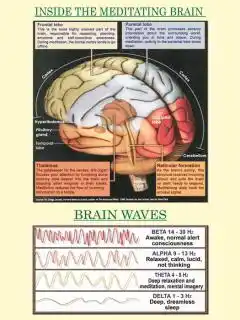
Inside the Meditating Brain
This illustration explores how meditation influences the human brain and its wave patterns. It visually maps the interaction between various brain regions—such as the prefrontal cortex, thalamus, and limbic system—during deep meditative states, highlighting how focus and awareness shift inward. The accompanying brainwave chart depicts the transition from active Beta waves (alert consciousness) to calming Alpha, creative Theta, and deeply restorative Delta waves, symbolizing the journey from external engagement to inner peace and spiritual stillness.
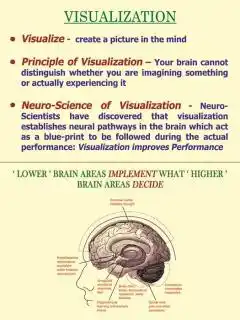
Visualisation in Meditation
This visual explains how the act of imagining creates real neurological changes within the brain. When we visualize, the mind forms vivid internal pictures that the brain processes as genuine experiences. Neuroscience shows that such mental imagery builds new neural pathways—serving as blueprints for future action and performance. The diagram highlights how the higher brain areas decide and the lower areas execute, revealing how focused visualization bridges thought and reality.
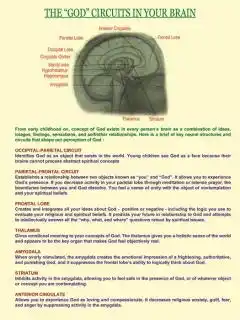
God Circuits inside Brain
This concept explores the fascinating connection between spirituality and neuroscience. The image illustrates how different brain regions—such as the frontal lobe, thalamus, and limbic system—work together to shape our perception of the divine. From the formation of beliefs to feelings of awe, peace, and devotion, each circuit contributes to our spiritual experience. It suggests that the sense of God or higher consciousness is not merely imagined, but deeply integrated within the brain’s structure and functioning—bridging science and spirituality.
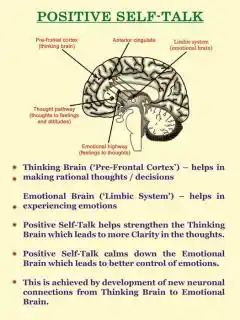
Positive Self-Talk
This visual highlights the neuroscience behind the power of positive thinking. It explains how the Prefrontal Cortex (the thinking brain) and the Limbic System (the emotional brain) interact to shape our thoughts and emotions. Through consistent positive self-talk, new neural pathways form—strengthening clarity, emotional balance, and decision-making ability. By calming the emotional brain and empowering the rational mind, positive self-talk becomes a bridge to mental harmony and inner resilience.